Veneer Color Matching in Layton, UT: How Shade Works
How veneer shade selection actually works for Layton patients — the science, the mirror test, and why the right white changes everything about your smile.
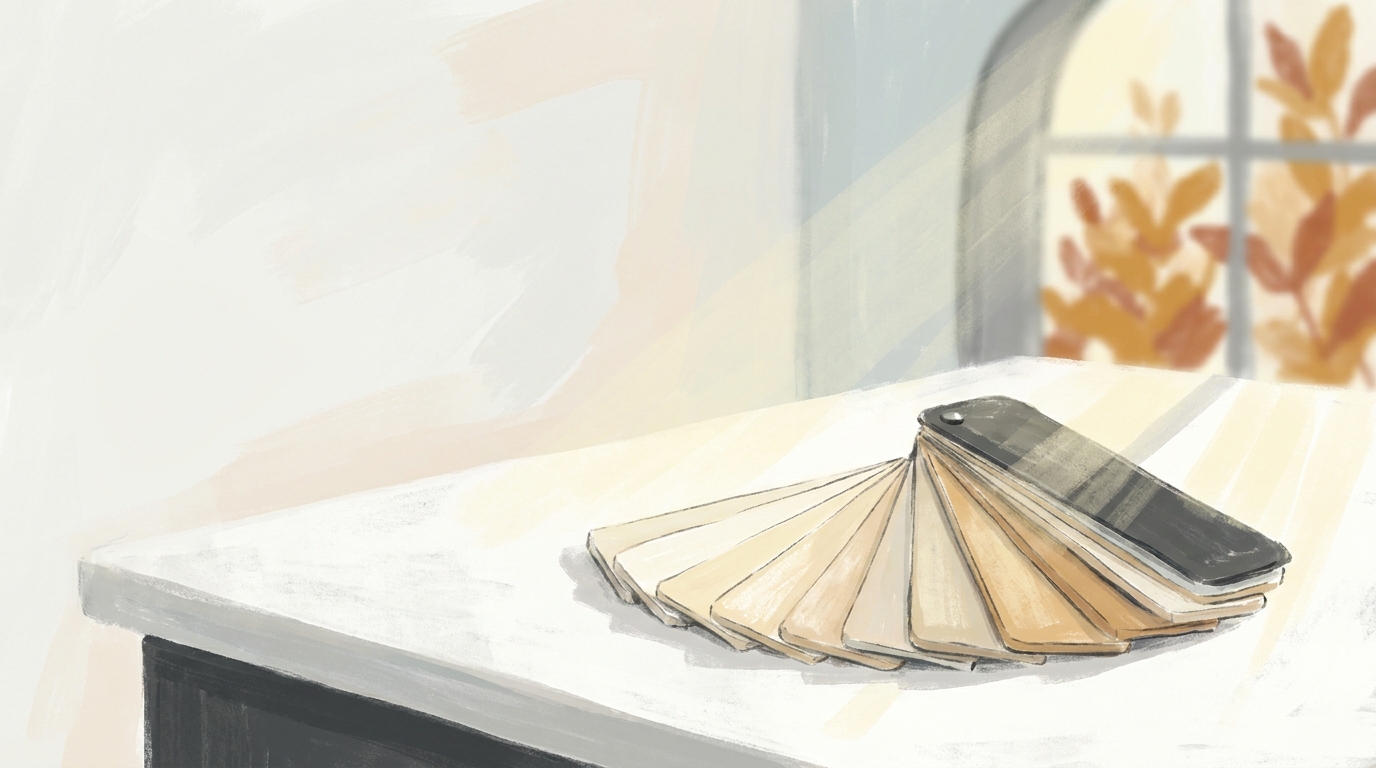
Veneer shade selection is a collaborative, structured process where your dentist uses a shade guide (most commonly the VITA Classical or VITA 3D-Master system), your natural tooth color, skin tone, and lighting conditions to choose a porcelain color that looks intentional — not fake. For most Layton, UT patients, the final shade lands one to three steps brighter than your current teeth, not the brightest tab in the drawer.
The brightest shade isn't the best shade. The right shade is the one that reads as your smile, elevated.
How does veneer shade selection actually work step by step?
Veneer shade selection happens in three stages: a baseline shade reading of your natural teeth, a target shade conversation where you preview options against your skin and lip color, and a final confirmation at the try-in appointment using temporary veneers or a mock-up. Your dentist matches to a numbered guide, photographs the result in natural light, and sends those specs to the lab.
A standard shade guide organizes tooth colors into lettered families, with veneer shades pushing into the brighter end of that spectrum — options like BL1, BL2, BL3, and BL4 are the "bleach" shades reserved for whiter, more luminous results.
At practices like Luca Aesthetic, the LUCAsmile® design process pairs shade selection with digital smile previews so you see the color on your face before anything is bonded. A tab held next to your tooth is one thing. A full smile rendered in your target shade is another.
What factors influence the right veneer color for you?
Four factors drive the right shade: your skin undertone (warm, cool, or neutral), your eye and hair color, your current tooth shade, and how much contrast you want. Age plays a role too — a younger person can carry a BL2 confidently; the same shade on someone older can read as unnatural against softer facial features.
Skin undertone
Cool undertones (pink, blue, red flush) pair with brighter, cooler whites like BL1–BL3. Warm undertones (golden, olive, peachy) look most natural with slightly warmer whites in the A1 or BL4 range. Neutral undertones have the widest range to play with.
Lighting in Layton
Northern Utah's high-altitude sunlight along the Wasatch Front is unusually bright and clear — veneers that look right in a dim bathroom mirror can look chalky under direct Layton daylight at Antelope Island or on a sunny February morning in East Layton. A good shade consultation checks the color under multiple light sources.
The teeth around them
If you're only veneering the front six to eight teeth, the new porcelain has to blend with the molars behind them. A dramatic shade jump creates a visible seam when you laugh. This is where most shade regret originates.
What are the most common veneer shades and who are they for?
Here's a quick comparison of the shade ranges Layton patients typically consider:
| Shade Range | Appearance | Best For |
|---|---|---|
| A1 | Natural bright white with warm tone | Patients wanting subtle improvement; mature smiles |
| B1 | Classic Hollywood white, slightly cooler | The most-requested "natural but noticeable" shade |
| BL3 – BL4 | Bright, luminous white | Younger patients, bold aesthetic preference |
| BL1 – BL2 | Ultra-bright, high-luminosity | Full-mouth cases, red-carpet aesthetic |
| OM1 – OM3 | Beyond standard range, maximum brightness | Full arches only; rarely appropriate for partial cases |
B1 is a widely favored shade in cosmetic dentistry — bright enough to notice, natural enough that strangers assume you were born with it.
Can you preview the shade before committing?
Yes — and you should. Before any tooth preparation, reputable cosmetic dentists use digital smile design software, wax-ups, or temporary mock-ups bonded to your actual teeth so you can live with the proposed shade for a few days. This is the single most important step for avoiding regret, and it's standard practice in minimally invasive protocols.
Luca Aesthetic's LUCAsmile® process is built around a noninvasive, no-grinding approach to smile creation — which means your preview is reversible, and your input on shade carries real weight before anything permanent happens. The practice offers general dentistry, aesthetic implants, clear aligners, and facial aesthetics, giving the design team a full picture of how your veneers will sit alongside the rest of your smile and face.
What mistakes do Layton patients make with shade selection?
The three most common errors: choosing based on a celebrity photo (lighting and camera filters distort shade dramatically), going too white because "brighter is better" (it isn't — your eyes read the contrast with your lips and skin), and skipping the try-in appointment. Patients who rush shade selection are far more likely to request redos within the first year.
A fourth mistake is specific to our region: shade-matching under warm indoor lighting in winter, then being surprised by how the veneers look under the clear high-altitude sun come spring. Ask to see your shade preview in natural daylight before you approve it.
What does a Layton patient's shade journey actually look like?
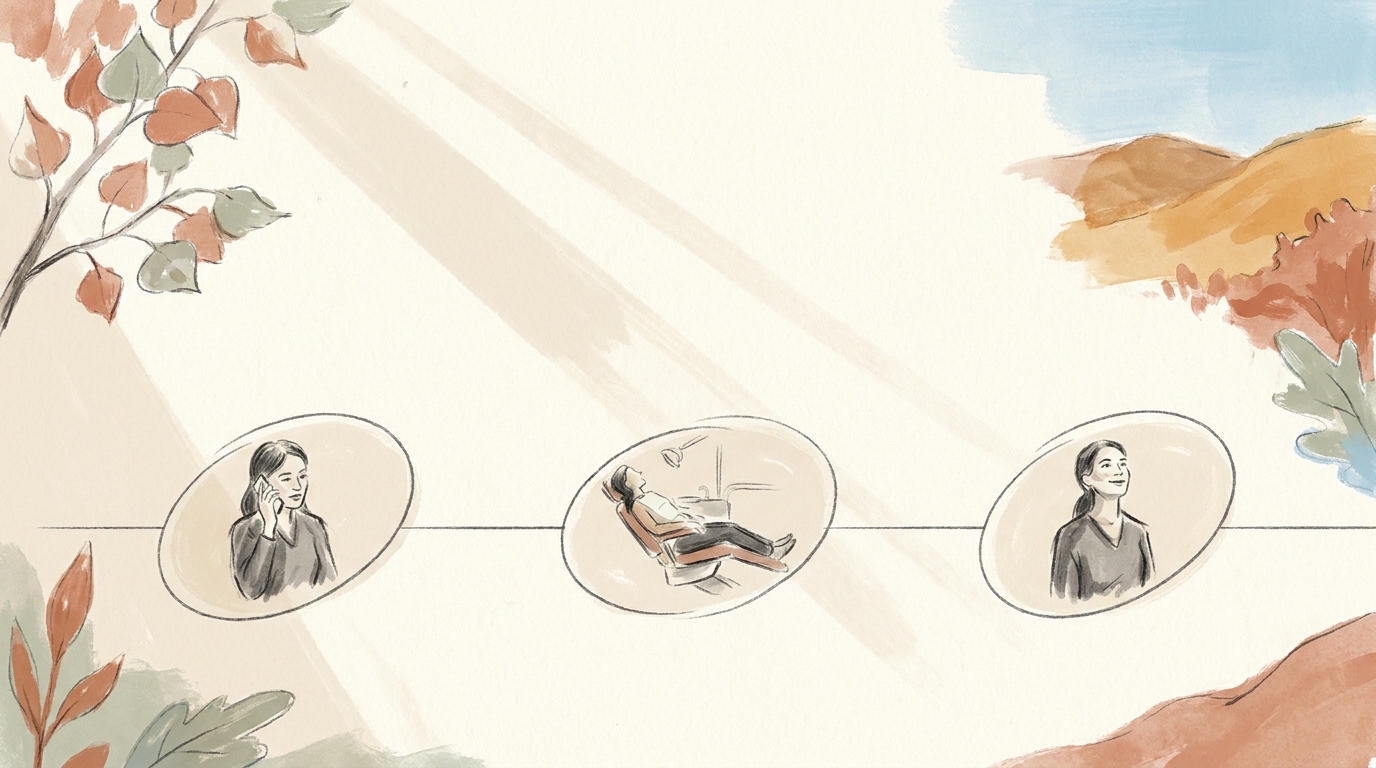
The shade conversation starts at your first consult, continues through digital design, and finalizes at the try-in appointment where temporary veneers are placed and photographed.
Luca Aesthetic states it has created 518 smiles, with the LUCAsmile® design process anchoring that work. For bilingual patients, Dr. Hiram Maynez — a University of Utah School of Dentistry graduate with advanced training in restorative dentistry, oral surgery, and prosthodontics — is fluent in Spanish, which makes the shade conversation (a conversation that absolutely needs to be precise) accessible in either language.
Frequently asked questions about veneer shade selection in Layton, UT
Can I change my veneer shade later if I don't like it?
Not easily. Porcelain veneers cannot be whitened or dyed after they're bonded — the color is baked in at the lab. If you decide the shade is wrong after final placement, your only option is to replace the veneers, which means the full process and cost over again. This is exactly why the try-in appointment and digital preview exist.
Will my veneers match my natural teeth or stand out?
That's your choice, and it's the central question of shade selection. Veneers can be designed to blend seamlessly with surrounding natural teeth, or to intentionally brighten your entire smile zone if you plan to whiten the rest of your teeth to match. Discuss this clearly at your consult — "blend" versus "brighten" are two different design briefs.
Does shade affect how long veneers last?
No — the shade you choose does not affect durability. Veneer longevity depends on material quality, bonding technique, your bite, and your home care. Porcelain veneers resist staining regardless of their shade, which means a BL1 veneer and an A2 veneer will both hold their color for the lifetime of the restoration if cared for properly.
Should I whiten my teeth before choosing a veneer shade?
Yes, if you're only getting partial veneers. Whitening your natural teeth first establishes your baseline shade, so your veneers can match a brighter target rather than being designed to blend with teeth that will later be whitened. For full-mouth veneer cases, pre-whitening isn't necessary because every visible tooth will be covered.
How many veneers do I need to get the color I want?
Most smile makeovers use eight to ten veneers covering the teeth visible when you smile widely. Fewer veneers (four to six) limit how dramatically you can shift your shade without creating visible contrast against your untreated teeth. Your smile line — how many teeth show when you laugh — determines the number more than the shade goal itself.
Can bright Utah sunlight make my veneers look different outdoors?
Yes. High-altitude sunlight along the Wasatch Front has a cooler, more intense quality than indoor incandescent lighting, which can make warm-tone veneers appear more yellow and cool-tone veneers appear more gray outside. A thorough shade consultation includes checking the final color against natural daylight before approving the lab prescription.
Choosing shade with confidence in Layton
Shade selection is where good veneer work separates from great veneer work. The science is in the guides and the photography; the art is in matching a shade to you — your face, your lighting, your age, your personality.
If you're in Layton, UT and ready to start the conversation, Luca Aesthetic can be reached at (385) 758-5812 or at https://www.lucaaesthetic.com/ to schedule a consult and walk through the LUCAsmile® design process together.