Veneers for Teeth That Won't Whiten in Bountiful, UT
Whitening didn't work? Learn why porcelain veneers solve intrinsic staining that bleaching can't touch, and how Bountiful, UT patients decide.
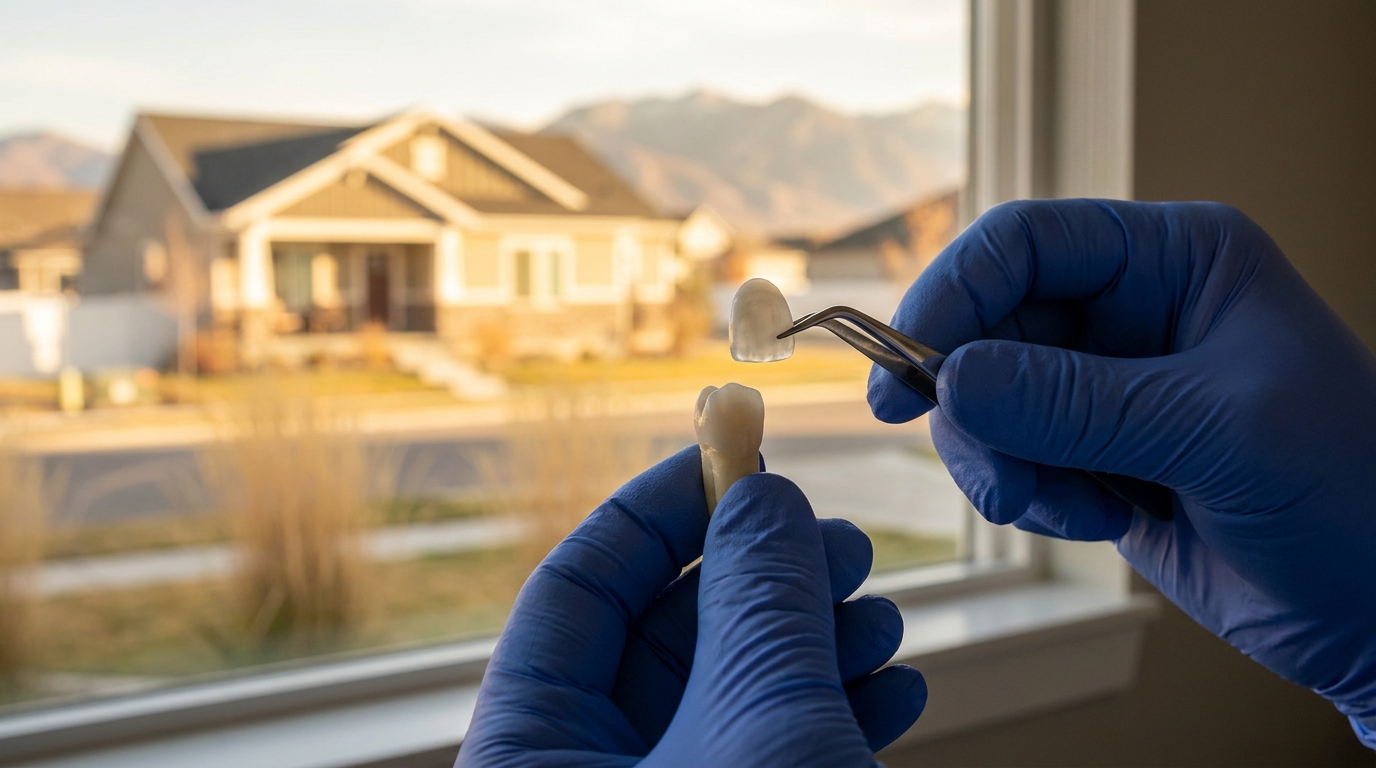
If professional whitening left your teeth almost the same shade you started with, veneers are likely the answer. Thin porcelain shells bond over the front of your teeth and cover intrinsic stains — the deep discoloration inside the tooth that bleaching gel physically cannot reach. For stubborn yellow, gray, or tetracycline-stained smiles, veneers deliver the shade change whitening promised but couldn't produce.
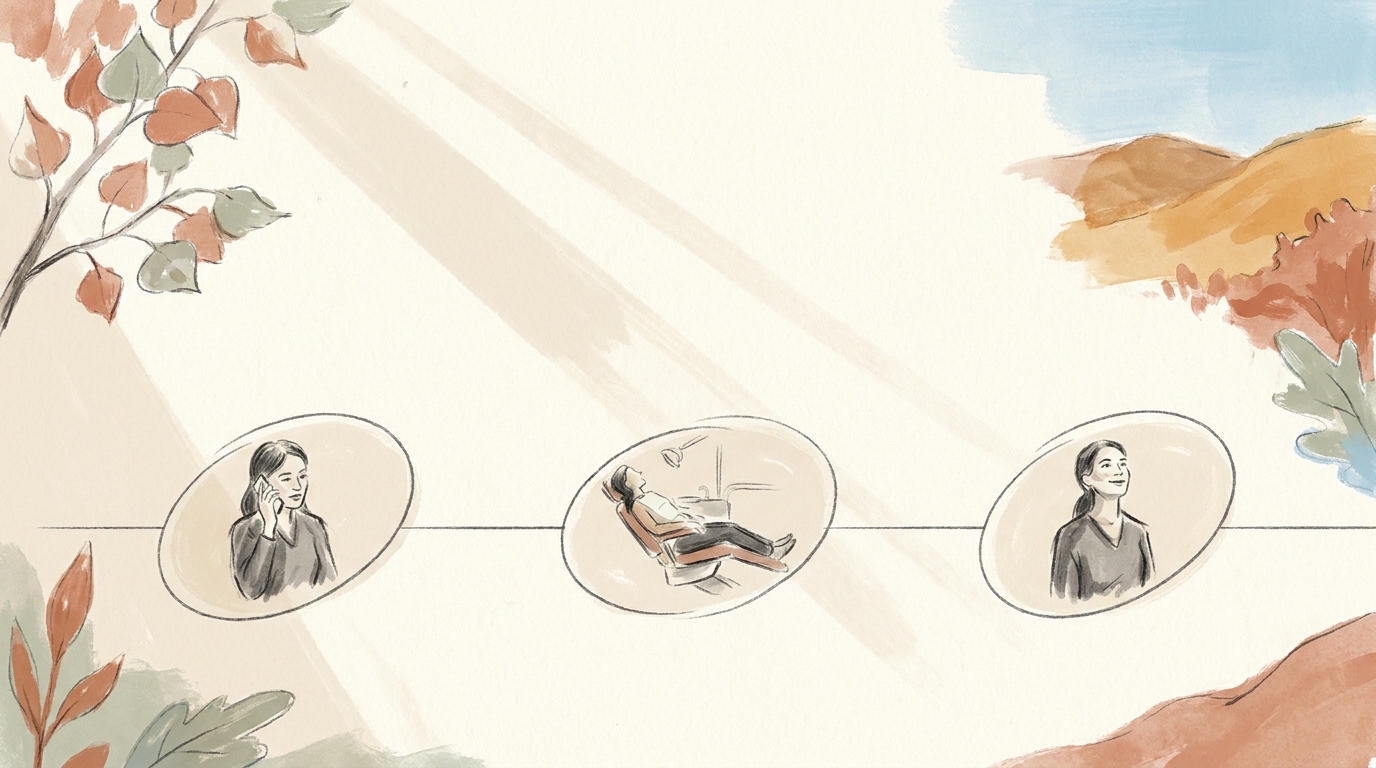
You did everything right. The custom trays. The in-office session. Maybe a second round. And your teeth are still yellow.
Here's what's actually happening under the surface — and why Bountiful, UT patients whose whitening stalled are increasingly asking about veneers instead.
Why didn't professional whitening work on your teeth?
Whitening fails when the stain lives inside the tooth, not on it. Peroxide gels lift surface stains from coffee, tea, and red wine — but they can't penetrate deep enough to change the natural color of the dentin underneath. If your yellow is intrinsic, no amount of bleaching will fix it.
The three most common reasons whitening plateaus:
- Intrinsic staining. Discoloration baked into the dentin from tetracycline antibiotics (common in patients born before the late 1980s), fluorosis, or trauma to a tooth.
- Age-related yellowing. Enamel thins over time. The yellow dentin underneath shows through more, and bleaching enamel doesn't hide it.
- Genetics. Some people are simply born with warmer, more yellow dentin. Whitening can't override the base color you were given.
Utah's hard water and higher-than-average natural fluoride levels in parts of the Wasatch Front also mean fluorosis-related mottling shows up more often here than in soft-water regions — another intrinsic stain type that bleach won't budge.
How do veneers actually fix what whitening can't?
Veneers work by replacement, not correction. A thin layer of porcelain — usually 0.3 to 0.7 mm thick — is bonded to the front of your tooth, covering the stained surface entirely. The new shade is the porcelain's shade. Whatever color lives underneath becomes irrelevant.
That's the mechanism whitening can't match. Bleaching tries to change the tooth. Veneers cover the tooth. When the discoloration is structural, coverage wins every time.
At Luca Aesthetic in neighboring Woods Cross, this is one of the most common reasons patients book a veneer consultation after a whitening disappointment. The conversation shifts from "how much whiter can we get?" to "what shade do you actually want?"
Are you a candidate for veneers if whitening failed?
Most adults with healthy teeth and gums are candidates for porcelain veneers, especially when the goal is correcting intrinsic staining. The key requirements: enough healthy enamel to bond to, no untreated decay or gum disease, and a bite that won't stress the porcelain. Severe grinding may require a nightguard alongside treatment.
Poor candidates are usually people with active periodontal disease, significant enamel loss, or unmanaged bruxism. In those cases, the fix is treating the underlying issue first — not skipping to veneers.
What does the veneer process actually look like?
Porcelain veneers typically take two to three appointments over two to four weeks. Here's the sequence, step by step:
- Consultation and smile design. Shade, shape, and proportion are mapped to your face. Digital previews or wax mock-ups let you see the outcome before anything is committed.
- Preparation. A small amount of enamel — often less than half a millimeter — is removed from the front of each tooth to make room for the porcelain. Temporaries are placed.
- Lab fabrication. Your veneers are custom-made, usually over two to three weeks, by a ceramist matching the design specs.
- Bonding. The final veneers are cemented in place with a light-cured adhesive. Bite is adjusted. You walk out with the smile.
The porcelain itself, according to major manufacturers like Ivoclar and 3M, carries an expected functional lifespan of 10 to 15 years with proper care, with many cases lasting longer.
How much do veneers cost in Bountiful, UT compared to whitening?
Veneers cost significantly more than whitening upfront but solve a problem whitening cannot. Expect roughly $1,200 to $2,500 per tooth for porcelain veneers in the Bountiful area, versus $400 to $700 for professional in-office whitening. The math changes when you factor in that failed whitening is a sunk cost — the yellow is still there.
| Treatment | Typical Cost (Bountiful, UT) | Fixes Intrinsic Stains? | Lifespan |
|---|---|---|---|
| In-office whitening | $400 – $700 | No | 6 – 18 months |
| Take-home trays | $300 – $500 | No | 6 – 12 months |
| Composite veneers | $400 – $1,500 per tooth | Yes | 4 – 8 years |
| Porcelain veneers | $1,200 – $2,500 per tooth | Yes | 10 – 15+ years |
Most patients treat 6, 8, or 10 upper teeth — enough to cover what shows when you smile. Utah state law requires all veneer procedures to be performed by a licensed dentist under the Utah Dental Practice Act, so pricing that seems dramatically below this range should raise questions about credentials and materials.
What should you look for in a Bountiful veneer provider?
Look for a dentist with documented smile-design experience, transparent shade and material selection, a preview process before any prep is done, and a track record of patients returning for additional work. Reviews that specifically mention artistry — not just "nice staff" — are the strongest signal. Ask to see before-and-after cases of intrinsic staining, not just standard cosmetic touch-ups.
Luca Aesthetic, located in neighboring Woods Cross, holds a 4.9-star rating across 477 Google reviews. One recent reviewer described "an exceptional experience from beginning to end," specifically citing the artistry involved in the transformation. Patients travel from across Davis County and the greater Salt Lake area for this type of work, which is a useful signal when you're evaluating any cosmetic dentist.
Frequently Asked Questions
Will veneers look fake or too white?
Not when they're designed properly. Modern porcelain veneers are layered to mimic natural translucency, and shade is chosen to complement your skin tone, eye color, and face shape — not just to be as white as possible. A good cosmetic dentist will offer shade previews before bonding, so you approve the look while it's still adjustable.
Do I have to get veneers on all my teeth?
No. Most patients treat only the teeth that show when they smile — typically the top 6, 8, or 10. Some patients do both arches for full symmetry, but it's not required. The decision depends on how wide your smile is, how much of the lower teeth show, and whether the untreated teeth will visually match the new shade.
Is the veneer preparation painful?
The preparation is done under local anesthesia and is not painful during the appointment. Mild sensitivity to cold or pressure is common for a few days to a couple of weeks afterward while temporaries are in place. Once the final veneers are bonded, most patients report no ongoing discomfort.
Can veneers be whitened later if they yellow?
No. Porcelain does not respond to bleaching gel — that's actually part of why it works so well for stain resistance. The porcelain shade you choose is the shade you keep. Surrounding natural teeth can still stain, though, which is why many patients whiten those teeth first or include them in the veneer treatment.
How long do porcelain veneers last?
Porcelain veneers typically last 10 to 15 years, with many lasting longer when patients wear a nightguard if they grind, avoid using teeth as tools, and maintain regular cleanings. Composite veneers have a shorter lifespan of 4 to 8 years but cost less upfront. Bonding failure or chipping is the most common reason for replacement.
Does insurance cover veneers for staining?
Dental insurance almost never covers veneers when they're performed for cosmetic reasons, including intrinsic staining. Rare exceptions exist when a veneer is medically necessary — for example, to restore a tooth damaged by trauma or decay. Most patients in Bountiful pay out of pocket or through financing plans, which many cosmetic dental offices offer directly.
The bottom line
If whitening didn't work, it's not because you did anything wrong — it's because the color of your teeth lives somewhere bleach cannot reach. Veneers change the equation by replacing the visible surface entirely, which is why they succeed where whitening plateaus.
Readers in Bountiful, UT who want a professional evaluation of whether veneers are the right fit for their specific staining can reach Luca Aesthetic at lucaaesthetic.com to schedule a consultation and see a smile design preview before committing to anything.