Tooth Removal for Veneers in Woods Cross, UT: The Truth
Wondering how much enamel veneers really remove — and if it hurts? A frank, myth-busting breakdown for Woods Cross, UT patients considering a smile upgrade.

Here's the short answer: modern porcelain veneers typically remove about 0.3 to 0.7 millimeters of enamel — roughly the thickness of a fingernail — and the prep itself is not painful because your tooth is numbed with local anesthetic. The old image of teeth being ground down to sharp little pegs? That's an outdated technique, not what happens at a contemporary cosmetic practice in Woods Cross, UT.
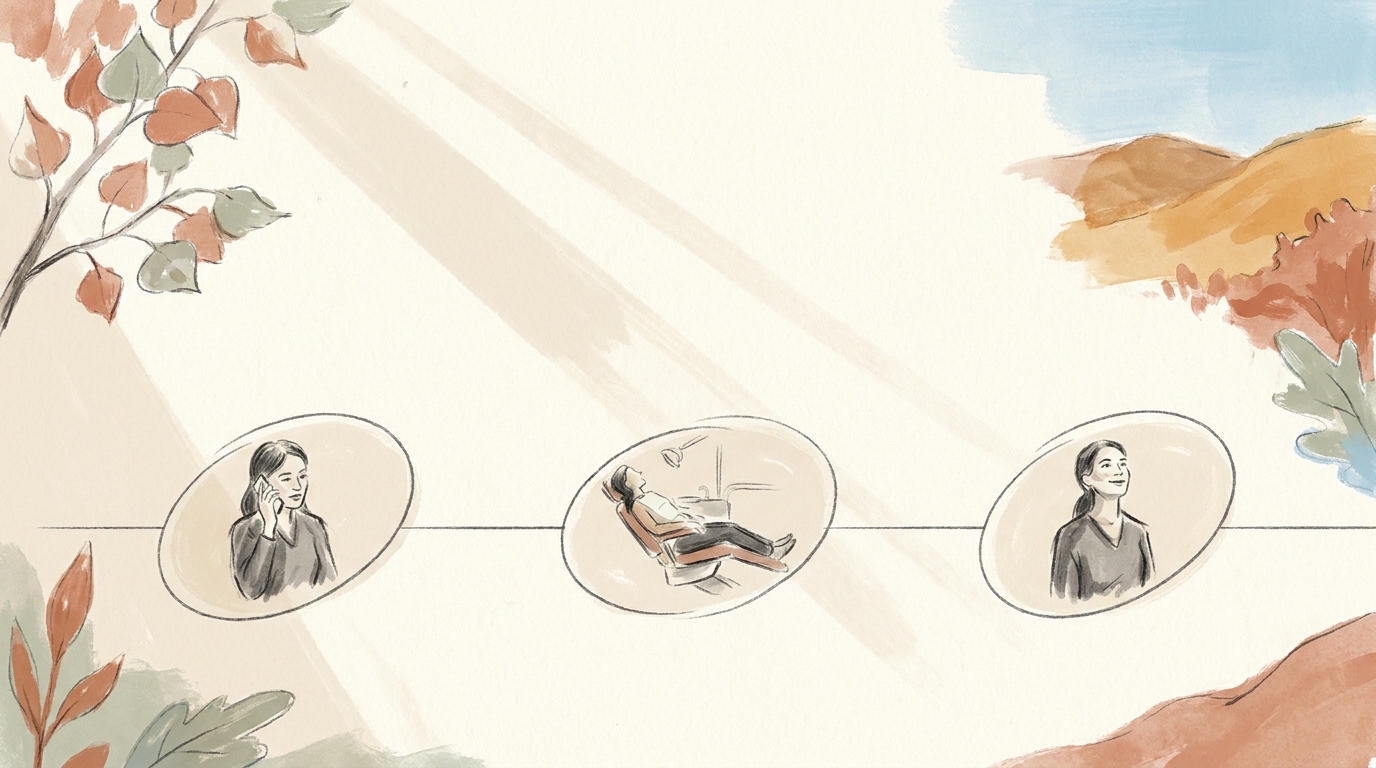
If you've been putting off a smile you actually love because you're afraid of what happens in the chair, this one's for you.
How much tooth structure is actually removed for veneers?
For traditional porcelain veneers, dentists remove roughly 0.3 to 0.7 mm of enamel from the front of the tooth — less than the thickness of an eggshell in some cases. Minimal-prep and no-prep veneers can require as little as 0.2 mm or none at all. The tooth underneath stays fully alive, structured, and functional.
The myth: Veneers require shaving your tooth down to a little stub.
The reality: That mental image comes from crown prep — a completely different procedure. Crowns cover the entire tooth and do require significant reduction. Veneers only cover the front-facing surface, so the prep is dramatically more conservative.
Think of it like the difference between reupholstering a chair cushion and rebuilding the whole chair.
Why does the "tooth shaving" fear persist?
The fear persists because early veneer techniques from the 1980s and 1990s did require more aggressive reduction, and viral before-and-after photos of "shark teeth" prep spread widely on social media. Those images almost always show crown preparation or extreme cases — not standard modern veneer prep, which preserves the vast majority of your natural tooth.
Today's porcelain is stronger and thinner. Digital scanning and diagnostic mock-ups let cosmetic dentists plan the exact minimum reduction needed for each individual tooth — sometimes different amounts on different teeth in the same smile.
Experts at Luca Aesthetic emphasize that the goal is always the most conservative prep the case allows. If a tooth is already worn, chipped, or slightly recessed, sometimes almost no reduction is needed at all.
Does the veneer prep process actually hurt?
No — the prep appointment itself is not painful. Your dentist numbs the area with local anesthetic before any enamel is touched, so you feel pressure and vibration but not pain. Most patients describe it as easier than a routine filling. Mild sensitivity to cold or air for a few days between prep and final placement is common but manageable.
Here's what actually happens in the chair:
- Numbing gel, then a small anesthetic injection
- Gentle, precise enamel reduction using a fine handpiece
- A digital scan or impression for your custom veneers
- Temporary veneers bonded on while your permanents are crafted
The whole appointment usually runs 1.5 to 3 hours depending on how many teeth you're doing. You drive yourself home. You eat dinner. You go back to your life.
What about sensitivity between appointments?
Between prep day and final placement (usually 1-3 weeks), you'll wear temporary veneers that protect the prepped surface. Mild sensitivity to cold drinks or air is normal during this window because a thin layer of enamel has been removed. It typically fades within a few days and disappears entirely once your permanent veneers are bonded.
A few practical tips for the in-between phase:
- Skip ice water and very hot coffee for the first few days
- Avoid sticky or crunchy foods that could pop a temporary loose
- Brush gently and floss carefully around the edges
- Use a sensitivity toothpaste if cold air bothers you
Woods Cross, UT sits at about 4,300 feet elevation with dry Wasatch Front air that can already contribute to tooth sensitivity — so a little extra awareness during the temporary phase is worth it, especially in the drier winter months.
How do the main veneer options compare on tooth reduction?
The amount of enamel removed depends on the veneer type you choose. Here's how the primary options stack up on prep depth, longevity, and reversibility.
| Veneer Type | Enamel Removed | Typical Lifespan | Reversible? |
|---|---|---|---|
| No-prep porcelain | 0 mm | 10-15 years | Yes |
| Minimal-prep porcelain | 0.2-0.3 mm | 10-20 years | Mostly |
| Traditional porcelain | 0.3-0.7 mm | 15-20+ years | No |
| Composite veneers | 0-0.5 mm | 5-7 years | Often |
According to the American Academy of Cosmetic Dentistry, traditional porcelain veneers remain the most popular choice because they balance longevity, stain resistance, and natural translucency — even though they require slightly more prep than no-prep options.
Who's a good candidate for minimal or no-prep veneers?
No-prep and minimal-prep veneers work best for patients with small or slightly worn teeth, minor spacing, or teeth that sit slightly recessed relative to the smile line. If your teeth are already prominent, crowded, or significantly discolored, traditional veneers usually deliver a better cosmetic result because they allow proper contouring and full color correction.
A thorough consultation is where this gets decided — not from a stock photo online. A cosmetic dentist evaluates your bite, enamel thickness, gum line, and smile goals before recommending a specific approach. At Luca Aesthetic, that consultation includes a digital preview so you can see the proposed result before any enamel is touched.
How do Woods Cross, UT patients actually feel about the process?
The anxiety is almost always worse than the reality. Luca Aesthetic's 4.9-star rating across 477 Google reviews reflects a pattern patients across the Wasatch Front consistently highlight: pain-free experiences, thorough consultations, and results that exceed expectations. One recent reviewer described it as "an exceptional experience from beginning to end." Another simply said they "immediately felt comfortable" at the consultation.
Fear of the unknown is the real barrier. Seeing the actual process — how minimal, how numbed, how planned — dissolves most of it.
Frequently Asked Questions
Will my teeth be permanently damaged by getting veneers?
Traditional porcelain veneers are considered irreversible because a thin layer of enamel is permanently removed, and enamel doesn't grow back. However, the tooth underneath remains healthy and structurally sound. No-prep and minimal-prep options preserve more or all of the natural enamel and can be reversible in many cases. Your dentist should discuss which category applies to your specific plan.
Do veneers ruin your real teeth underneath?
No — well-placed veneers do not ruin the natural tooth. The tooth stays alive, nourished, and functional under the veneer. Problems typically arise only from poor oral hygiene, untreated decay at the veneer margins, or bruxism (grinding) without a night guard. With proper care, the underlying tooth stays healthy for decades.
How long does the numbness last after veneer prep?
Local anesthetic used during veneer prep typically wears off within 2 to 4 hours. You can eat and drink once sensation returns, though most dentists recommend sticking to soft foods that first evening while your temporaries settle. Some patients feel mild tenderness around the injection site for a day, which resolves without treatment.
Can veneers be removed or replaced later?
Yes, veneers can be replaced when they eventually wear out — typically after 15 to 20 years for porcelain. The old veneer is removed and a new one is bonded in its place. Because some enamel was originally removed with traditional veneers, you will always need veneers or a similar restoration on those teeth going forward.
Is the prep worse for more veneers at once?
Not really — patients often do 6, 8, or 10 veneers in a single prep appointment without significantly more discomfort than doing two. The area is fully numbed and the technique is the same per tooth. The appointment simply runs longer. Many patients prefer doing the full smile at once for aesthetic consistency and to get everything over with in one recovery window.
What if I'm genuinely terrified of dental work?
Dental anxiety is common and manageable. Most cosmetic practices offer options like nitrous oxide (laughing gas) or oral sedation for anxious patients undergoing veneer prep. Talk openly with your dentist during the consultation — a practice experienced with nervous patients will build in extra time, explain each step, and pace the appointment around your comfort rather than the clock.
The bottom line for Woods Cross, UT patients
The "tooth shaving" fear is built on outdated images and crown-prep confusion — not on what actually happens in a modern cosmetic dental chair. Real veneer prep removes a fingernail's worth of enamel, under full anesthesia, in an appointment most patients describe as easier than they expected. The transformation on the other side is what people remember.
If you're in Woods Cross, UT and ready to talk through what your smile could look like — including which veneer type actually fits your teeth — Luca Aesthetic offers consultations at lucaaesthetic.com where the digital preview happens before any decisions are made. Seeing the plan tends to be the moment the fear stops running the show.