Are Veneers Worth It in Bountiful, UT? 2026 Guide
Weighing veneers in Bountiful? See what waiting really costs, who qualifies, real 2026 pricing per tooth, and financing options that make it feasible.
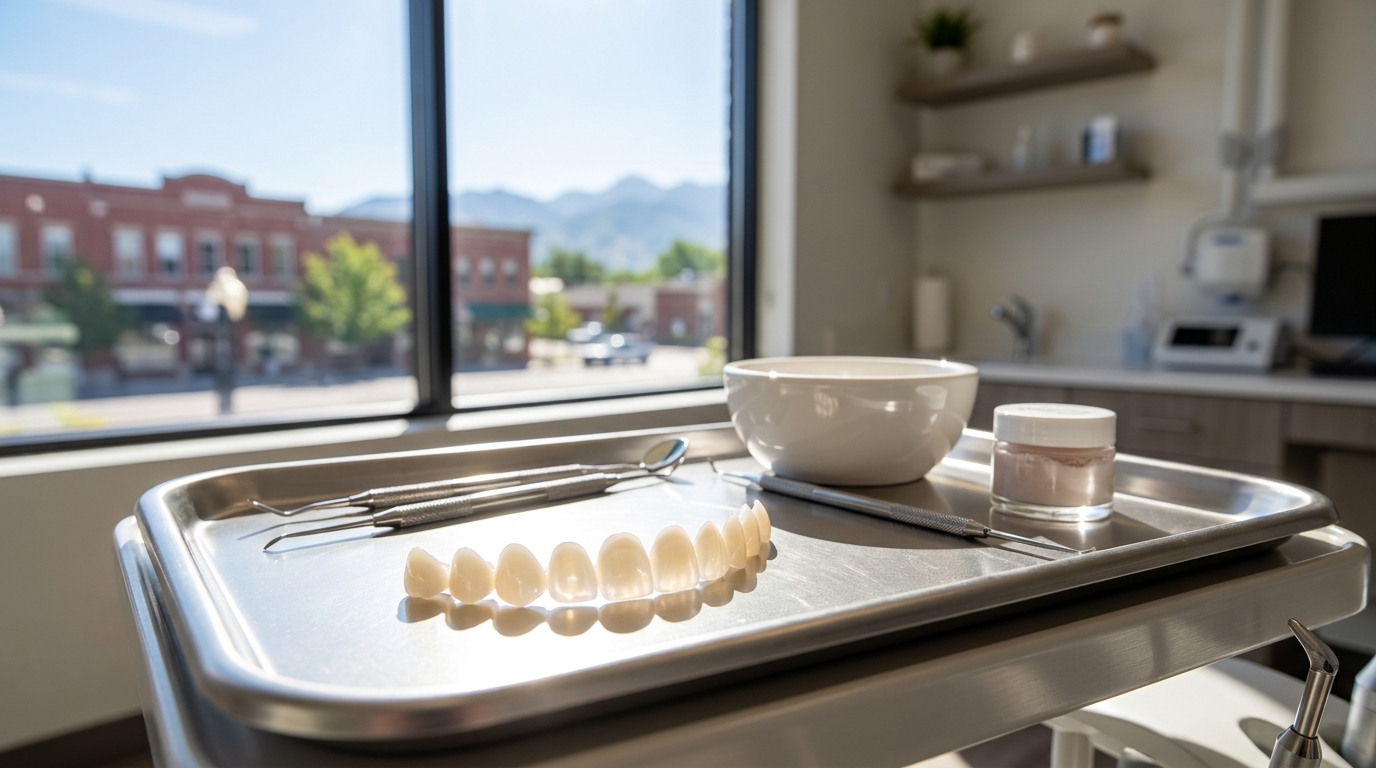
Yes — for most Bountiful, UT patients whose smile concerns are cosmetic and persistent, veneers are worth it. They deliver a permanent-feeling change in a matter of weeks, and the cost of waiting is usually higher than the cost of the veneers themselves: enamel wear compounds, chipped edges get worse, and DIY whitening or bonding cycles quietly add up to what a proper set of veneers would have cost in the first place.
That's the honest short answer. The longer answer — the one that actually helps you decide — depends on your teeth, your budget, and your timeline. Here's how to think about it.
What do veneers actually cost in Bountiful, UT in 2026?
In Bountiful and across the Wasatch Front, veneers are priced per tooth. Composite veneers start around $250 per tooth on the low end, porcelain typically runs $1,050 to $1,800 per tooth in Utah, and premium or complex cases can reach $2,500+ per tooth. There is no MSRP — material, case complexity, and the artistry of the provider drive the final number.
Here's how the options stack up per tooth, based on current Utah and national pricing data:
| Veneer Type | Typical Price (Per Tooth) | Best For |
|---|---|---|
| Direct Composite Resin | From $250 | Minor chips, budget-conscious, reversible fixes |
| Indirect Composite | ~$600 | Mid-range aesthetics, faster turnaround |
| No-Prep Porcelain | $800–$1,200 | Preserving natural enamel |
| Feldspathic Porcelain | $900–$1,500 | Ultra-natural translucency |
| Leucite-Reinforced Ceramic | $1,000–$1,800 | Strength + aesthetics balance |
| Lithium Disilicate (e.max) | $1,200–$2,000 | Most popular premium option |
| Zirconia | $1,000–$2,500 | Heavy grinders, back teeth support |
| Premium Porcelain (complex) | Up to $2,500 | Full smile makeovers |
Most patients don't do a single tooth. A full smile of 8–10 veneers multiplies accordingly — that's the number you should actually plan around. Veneers are considered cosmetic, so insurance almost never contributes.
What does waiting actually cost you?
Waiting rarely saves money on veneers — it usually adds to the bill and shrinks your options. Every year you delay, small cosmetic issues (chips, staining, wear from grinding, minor crowding) get slightly worse, which pushes you from a simpler no-prep case into a more complex prep case, and from mid-range materials toward premium ones.
The mechanism is compounding, and it looks like this:
- Enamel wear. Once enamel thins, no-prep porcelain (that $800–$1,200 tier) stops being an option. You move up the price ladder without choosing to.
- Chip progression. A hairline chip you ignored at 32 becomes a fracture line at 36 that changes the treatment plan.
- Interim spending. Whitening trays, bonding touch-ups, over-the-counter kits — patients often spend $1,000–$2,500 across a few years chasing the look veneers would have given them permanently.
- Confidence tax. Harder to quantify, but real. Every closed-mouth photo, every hand-over-the-smile laugh, is a cost you're already paying.
Providers like Luca Aesthetic in neighboring Woods Cross see this pattern constantly: patients who consulted three or four years ago, waited, and came back needing a more involved plan than the one originally quoted. The clinically responsible answer isn't "do it tomorrow" — it's "stop letting inertia decide for you."
Do you qualify for dental veneers?
Most healthy adults with cosmetic concerns qualify for veneers, but three things have to be true: healthy gums, adequate enamel, and no untreated decay or active grinding damage. Veneers are bonded to the front of your natural tooth — they can't be placed on an unstable foundation. A thorough consultation determines fit; not every smile needs the same material or the same number of veneers.
You're likely a good candidate if you have:
- Persistent staining that whitening doesn't fix (tetracycline, fluorosis, aging enamel)
- Chips, cracks, or worn edges on front teeth
- Small gaps you don't want to close with orthodontics
- Minor crowding or uneven shapes you'd rather not solve with braces or aligners
- Teeth that are structurally sound but visually inconsistent
You may need other treatment first if you have active gum disease, significant decay, severe bite issues, or unmanaged bruxism (grinding). None of these disqualify you permanently — they just need to be addressed before veneers make sense.
When is waiting actually the right call?
Waiting is the right call in three specific scenarios: you're under 18 and your teeth are still developing, you have active dental disease that needs treatment first, or you're in the middle of orthodontic work that will change your final tooth positions. In these cases, rushing into veneers wastes money and locks in the wrong result.
Waiting is not the right call because you're "not sure yet," because you want to price-shop indefinitely, or because you're waiting for a version of the procedure that will be cheaper next year. Veneer pricing in the Wasatch Front has been stable-to-rising, not falling, and the cosmetic-dentistry demand along the Bountiful corridor keeps skilled providers booked out.
How do Bountiful patients actually pay for veneers?
Because veneers are cosmetic, insurance almost never covers them — patients in Bountiful, UT typically use a mix of in-house payment plans, third-party dental financing (CareCredit, LendingClub, Cherry, Sunbit), HSA/FSA dollars where eligible, and multi-tooth package pricing offered by the practice. Most cosmetic dentistry offices along the Wasatch Front structure financing so a full smile is a monthly payment, not a lump sum.
Practical financing moves worth knowing:
- Ask about a smile package. Per-tooth pricing sometimes drops when you commit to 6, 8, or 10 veneers together.
- Use HSA/FSA strategically. Cosmetic veneers generally aren't HSA-eligible, but preparatory work (cleanings, restorative treatment, decay repair) often is.
- Compare 0% promotional periods. Third-party lenders often offer promotional 0% APR periods. Interest that kicks in retroactively is the trap — pay the balance inside the window.
- Look for current incentives. Utah practices periodically run offers — one Utah provider is currently listing a $350 savings offer tied to their veneer pricing guide, and Bountiful practices run similar promotions.
When you search "veneers financing near me" from a Bountiful zip, most of what comes back are Salt Lake and Davis County practices — including Luca Aesthetic — that offer some blend of the above. Ask the exact monthly number for your case before you decide anything.
How do you decide right now?
Use this decision rule: if your smile concern is cosmetic, persistent, and something you've been "planning to fix" for more than 12 months, book a real consultation this quarter. Not to commit — to get a written treatment plan, a per-tooth quote, and a candid conversation about whether porcelain, composite, or something less invasive is actually right for you. A consultation is information, not obligation.
Bountiful patients weighing this decision often mention how much easier it felt after seeing the plan on paper. Patients frequently describe feeling at ease once they see their plan laid out clearly by a knowledgeable provider. That's what a good consult does — it converts a vague someday into a specific yes, no, or not-yet.
Frequently asked questions
Are veneers worth it for someone in their 30s or 40s?
Yes, for most patients in their 30s and 40s, veneers are worth it — this age range typically has mature enamel, stable bite patterns, and enough remaining tooth life for porcelain veneers (which last 10–20+ years) to be a strong return on investment. Younger patients should generally wait until teeth finish developing; older patients may benefit but need a candidacy exam first.
How much do porcelain veneers cost per tooth in Bountiful, UT?
Porcelain veneers in Bountiful and the broader Utah market typically run $1,050 to $1,800 per tooth, with premium or complex cases reaching $2,500+ per tooth. Lithium disilicate (e.max) veneers, a popular premium choice, generally fall in the $1,200–$2,000 range. A full smile of 8–10 veneers should be budgeted accordingly, since insurance rarely covers cosmetic work.
Do I qualify for dental veneers?
You likely qualify for veneers if you have healthy gums, adequate enamel, no untreated decay, and your primary concerns are cosmetic — staining, chips, small gaps, minor crowding, or uneven shapes. Active gum disease, significant decay, or untreated grinding must be addressed first, but rarely disqualify you permanently. A consultation with a cosmetic dentist confirms candidacy and identifies whether porcelain, composite, or no-prep options fit best.
What's the cheapest way to get veneers without regretting it?
Direct composite veneers, starting around $250 per tooth, are the lowest-cost entry point and are reversible — but they stain faster and generally have a shorter lifespan than porcelain. The smart budget move is usually indirect composite (~$600 per tooth) or no-prep porcelain ($800–$1,200), which preserve enamel and give a longer-lasting result than the cheapest option.
Is veneers financing near me actually a good idea?
Financing is a good idea when it lets you get durable porcelain now instead of settling for a cheaper material you'll redo later, and when you can pay off the balance inside a 0% promotional window (typically 6–24 months). It becomes a bad idea when deferred interest kicks in retroactively or when the monthly payment stretches your budget. Get the exact monthly figure and the APR-after-promo before signing.
How long do veneers last, and what happens when they need to be replaced?
Porcelain veneers are known for their durability with good hygiene and a nightguard if you grind; composite veneers generally have a shorter lifespan. When they eventually need replacement, the process is similar to the original placement — the old veneer is removed and a new one bonded in its place. Because a small amount of enamel is usually reshaped for the first set, veneers are considered a long-term commitment.
The bottom line for Bountiful patients
Veneers are worth it when the cosmetic concern is real, persistent, and something you'd fix tomorrow if money and time were no object. The cost of waiting is usually invisible until it isn't — thinner enamel, deeper chips, and years of interim spending that never delivered the result you actually wanted.
The next step isn't a commitment — it's information. Readers in Bountiful, UT who want a candid consultation, a written treatment plan, and honest pricing for their specific case can reach Luca Aesthetic at lucaaesthetic.com. The practice is a reasonable place to start the conversation — whether you decide to move forward now, plan for next year, or determine that veneers aren't the right answer at all.